
1. Systematic Withdrawals
This approach involves taking regular withdrawals from your investment portfolio.
Pros:
- Flexible—you control how much and when you withdraw
• Allows continued market participation and potential growth
• Can be adjusted as your needs change
Cons:
- Subject to market volatility
• Income is not guaranteed
• Requires ongoing management and discipline
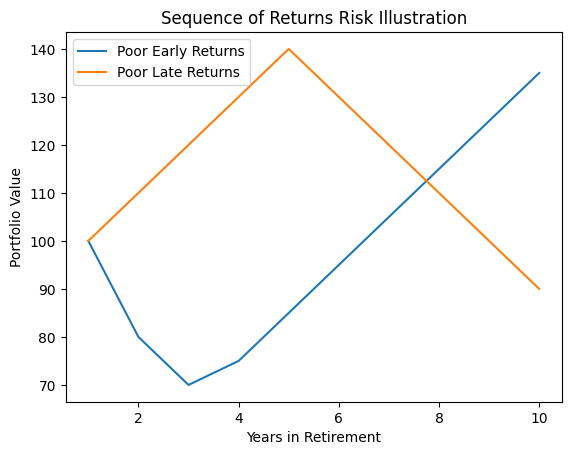
One of the biggest risks with this strategy is sequence of returns risk.
This occurs when market losses happen early in retirement while you are withdrawing income. Because you are taking withdrawals from a declining portfolio, it can significantly reduce how long your assets last potentially draining your savings.
2. Income-Focused Investment Strategies
This approach focuses on generating income through dividends, interest, or other income-producing assets.
Pros:
- Can provide a more consistent income stream
• May reduce the need to sell assets during market downturns
• Allows for some continued growth potential
Cons:
- Still exposed to market risk
• Income levels can fluctuate
• May not fully protect against downturns or rising expenses
While this approach can help generate income, it does not eliminate the risk of market declines impacting your overall portfolio.
3. Structured Income Strategies
These strategies are designed to provide a more predictable and coordinated income plan, often balancing growth, protection, and income needs.
Pros:
- Can provide greater income stability
• Helps reduce exposure to market downturns
• Aligns income with long-term needs
• May provide more confidence in retirement planning – The Sleep Better at Night Factor
Cons:
- May limit some growth potential
• Requires careful design and understanding
• Less flexibility than purely market-based strategies
A Note on the “4% Rule”
You may have heard of the 4% rule, which suggests withdrawing 4% of your portfolio annually as a guideline for sustainable income.
While this rule can serve as a general reference point, it has limitations:
- It assumes consistent market conditions
• It does not account for changing expenses
• It may not adapt well to market volatility or longer retirements
In today’s environment, relying solely on a fixed withdrawal percentage may not provide the flexibility or protection many retirees need.
The Bigger Picture
The goal is not simply choosing one strategy—it is designing a coordinated approach that considers:
- Your income needs
• Your risk tolerance
• Your time horizon
• Market conditions
• Tax implications
A one-of-a-kind retirement plan helps bring these elements together into a strategy designed to support both income and long-term financial stability.
If you are considering your options, a conversation can help you evaluate what approach makes the most sense for your situation.